

This article is contributed by JSCharting.
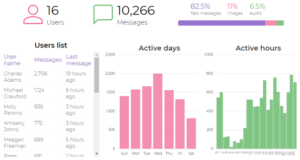
Improving Customer Experience (CX) with Data Visualization (DV)
Customer service departments in large organizations interact with thousands of customers every day. Each interaction carries valuable insights. However, as the volume of interactions increases, it becomes impossible to manually analyze every conversation or fully understand each individual customer journey. That is where Data Visualization (DV) plays a transformative role.
Modern visualization tools like JSCharting enable businesses to convert raw customer data into meaningful, interactive insights. Through analytics and machine learning, customer-facing teams can identify trends, detect friction points, and improve overall customer experience (CX).
For teams handling rapid information flow—marketing managers, sales representatives, and customer support professionals—visual dashboards significantly reduce response time. Research shows that organizations using data visualization and business intelligence tools obtain critical information 78% of the time within the decision window—22% more effectively than organizations that do not use such tools.
If you’re exploring practical implementations, you can review:
- JSCharting Tutorials: https://jscharting.com/tutorials/
- JSCharting Gallery & Examples: https://jscharting.com/examples/
- JSCharting Use Cases: https://jscharting.com/use-cases/
- Interactive Dashboard Demos: https://jscharting.com/dashboards/
Let’s explore how data visualization enhances customer experience and satisfaction.
Customer Interactivity
A few years ago, customer service relied heavily on static content and one-dimensional automated systems. Today, big data visualization has introduced dynamic, real-time engagement between businesses and customers.
Interactive app dashboards and live data sessions allow customers to see updates instantly as they make changes. With libraries like JSCharting, businesses can implement:
- Real-time updating charts
- Interactive tool tips and drill downs
- Responsive dashboards across devices
Example implementations:
- Live chart updates: https://jscharting.com/examples/chart-features/live-data/
- Drill down interaction examples: https://jscharting.com/examples/chart-features/drilldown/
These tools empower customers to make faster, more informed decisions—improving satisfaction and trust.
Financial institutions, investment centres, and banks use pie charts, trend lines, and spending graphs to help customers analyze expenses versus savings. This customer-centric visualization approach maximizes the value extracted from financial data and presents it in a clear, actionable format.
Analyzing Product Performance
Data visualization elevates customer experience by enabling organizations to monitor product performance in real time.
With interactive dashboards, companies can:
- Track product usage trends
- Identify common complaints
- Detect seasonal buying behaviour
- Monitor churn indicators
JSCharting product analytics examples:
- Business dashboard samples: https://jscharting.com/examples/dashboard/
- KPI and performance charts: https://jscharting.com/examples/chart-types/
Visualization simplifies recognition of behavioural trends and transforms raw data into actionable insights. Businesses can then adjust pricing, marketing strategy, or service improvements based on real customer feedback.
Understanding Data Consumption Objectives
With sufficient interaction data, visualization tools help answer critical questions:
- What information does the user need?
- When do they need it?
- Why do they need it?
- What is the minimum data required to answer their query effectively?
Interactive reporting tools ensure that customers and support agents access only relevant, simplified data instead of overwhelming datasets.
Creating a Mobile-First Design
An important application of data visualization is dashboard integration into websites and applications. Many businesses now display live metrics, statistics, and customer-specific analytics directly within their digital platforms.
JSCharting supports responsive and mobile-friendly charts:
- Responsive chart examples: https://jscharting.com/examples/chart-features/responsive/
- Mobile dashboard demos: https://jscharting.com/examples/dashboard/mobile/
The Mobile-First approach focuses on designing for smaller screens first, then scaling up to tablets and desktops. Since mobile screens have limited space, visualization becomes essential to compress complex datasets into digestible visual formats.
Customer analytics consistently show that mobile-first design increases engagement and session duration.
Identifying Customers with Recurring Issues
Improving CX also involves identifying customers facing recurring problems. Organizations often assign tracking codes or tags to such cases.
Data visualization dashboards can:
- Highlight repeat complaint patterns
- Track escalation timelines
- Monitor response resolution rates
- Flag high-priority customers in real time
Examples of tracking and categorization:
- Gantt and workflow charts: https://jscharting.com/examples/chart-types/gantt/
- Custom dashboard tracking: https://jscharting.com/examples/chart-features/annotations/
This structured visualization ensures that high-value customers are not overlooked and recurring issues are resolved proactively. Over time, this strengthens customer retention and loyalty.
Real-Time Complaint Management
Data visualization has become an integral part of handling big data in customer service operations. Real-time dashboards ensure:
- Faster response times
- Transparent communication
- Better workload distribution among agents
- Priority management for urgent tickets
With tools like JSCharting’s real-time capabilities:
- Real-time data streaming: https://jscharting.com/examples/chart-features/live-data/
Organizations can significantly improve their operational efficiency.
Conclusion
Customer experience is at the heart of modern business strategy, and Data Visualization is a critical enabler of consistent, data-driven CX delivery.
From interactive customer dashboards to internal analytics tools for employees, visualization enhances clarity, speeds up decision-making, and strengthens communication.
By leveraging advanced charting libraries such as JSCharting, businesses can transform complex data into actionable insights—ultimately improving satisfaction, engagement, and long-term loyalty.
In today’s data-driven environment, effective visualization is not just an advantage—it is a necessity for sustainable growth.

3 responses to “Improving Customer Experience (CX) with Data Visualization (DV)”
Fmovies.se is a place that you can use to watch free movies online. If in any case you can not able to reach to the main website then sites like fmovies will help you to get the same content quality in free.
https://www.linkandthink.org/sites-like-fmovies-alternatives/
These alternatives are forthwith fashionable amidst the multiplex fanatics who desire to see films online or yearn to download them. These choices are so viral because you can attend documentaries or films in numerous pieces of literature and distinct kind of sorts also.
download movies for free without membership or signing up
OOH media is the best way to promote your business and it is the way to attract more and more towards business and dooh programmatic company helps to make your way to an advertisement.